By Clara Craig May 16, 2025
The landscape of modern commerce is undergoing a seismic shift that is redefining how transactions occur between businesses and consumers. As we move further into a digital-first era, the traditional methods of handling currency and swiping cards are rapidly being replaced by more efficient, secure, and hygienic alternatives. At the heart of this transformation is the POS System, a critical component that serves as the central nervous system for retail and hospitality businesses alike. For business owners, the question is no longer whether to adopt these technologies, but rather how quickly they can adapt to meet the soaring expectations of a tech-savvy customer base.
The rise of mobile wallets like Apple Pay, Google Pay, and Samsung Pay has moved from a niche convenience to a mainstream requirement. Consumers today carry their smartphones everywhere, and the ability to complete a purchase with a simple tap has become a standard expectation. If your current POS System is lagging behind, you are likely introducing friction into the customer journey. Friction in the checkout process is one of the primary reasons for cart abandonment and lost repeat business. Therefore, understanding the technical and strategic requirements of contactless payment readiness is essential for maintaining a competitive edge in a crowded marketplace.
In this comprehensive exploration, we will delve into the intricacies of Near Field Communication (NFC) technology, the hardware requirements for modernizing your infrastructure, and the immense benefits that come with a fully optimized POS System. We will also examine the security protocols that make contactless payments safer than traditional methods and provide a roadmap for businesses looking to transition smoothly into the future of commerce. By the end of this guide, you will have a deep understanding of why investing in a modern POS System is one of the most brilliant moves you can make for your business success.
The Technological Foundation of Contactless Transactions
To understand the necessity of an upgrade, one must first understand the technology that powers the contactless revolution. Most modern mobile payment solutions rely on Near-field communication to transmit data between a device and a terminal. This technology allows two devices—such as a smartphone and a POS System—to communicate when they are within a few centimeters of each other. Unlike traditional magnetic stripe cards, which require physical contact and are susceptible to skimming, NFC uses radio frequency identification to exchange encrypted information instantly.
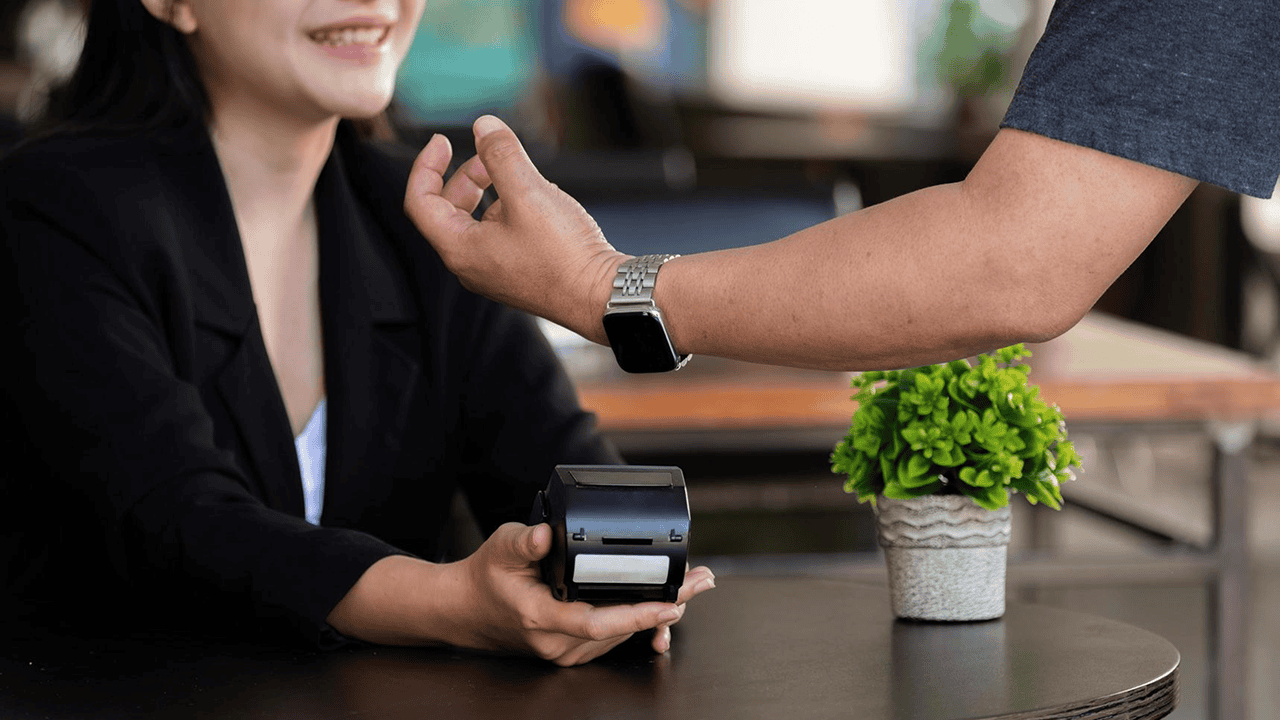
When a customer brings their Apple Watch or iPhone near a compatible POS System, the terminal sends a signal that initiates a secure handshake. This process is nearly instantaneous, often completing in less than two seconds. For a busy coffee shop or a high-volume retail store, these saved seconds accumulate, leading to shorter lines and a higher volume of transactions per hour. This efficiency is a direct result of having a robust POS System that is specifically designed to handle high-speed data exchanges without lag or connectivity issues.
Furthermore, the integration of NFC technology into a POS System is not just about speed; it is about creating a versatile environment where multiple forms of payment can coexist. Whether it is a physical contactless card, a wearable device, or a digital wallet, a modern terminal serves as a universal receiver. This versatility ensures that you never have to turn a customer away because you lack the appropriate hardware to process their preferred payment method.
Enhancing the Customer Experience Through Innovation
The psychological impact of a smooth checkout process cannot be overstated. When a customer approaches the counter and sees a modern, clean POS System that clearly indicates support for Apple Pay, it instills a sense of confidence and trust. It signals that the business is forward-thinking and prioritizes customer convenience. In contrast, a legacy POS System that requires multiple attempts to read a card chip or asks for a signature on a physical receipt can feel outdated and frustrating.
Customer loyalty is built on a series of positive micro-interactions. By streamlining the final point of contact, a POS System helps ensure that the customer leaves the establishment on a high note. This positive sentiment often translates into higher ratings on review platforms and increased word-of-mouth referrals. In an age where digital reputation can make or break a business, the role of the POS System in facilitating a flawless exit is paramount.
Moreover, the data collected by a modern POS System can be used to further enhance the customer experience. Many contactless-ready systems allow for the digital delivery of receipts via email or text. This not only saves paper but also provides a non-intrusive way for businesses to gather customer contact information for future marketing efforts. When a POS System is integrated with a loyalty program, customers can often earn and redeem rewards automatically through their mobile wallets, creating a frictionless loop of engagement and gratification.
Assessing Your Hardware and Software Compatibility
Transitioning to a contactless-capable environment requires a thorough audit of your existing infrastructure. Many business owners mistakenly believe that a simple software update can enable NFC capabilities on an old terminal. However, the ability to process Apple Pay is primarily a hardware-dependent feature. If your current POS System does not have a built-in NFC reader, you will need to invest in new peripherals or a completely new terminal setup.
When evaluating new hardware, it is important to look for devices that are PCI-PTS compliant. This ensures that the physical hardware meets the highest security standards for protecting cardholder data. A high-quality POS System will also feature a customer-facing display that clearly prompts the user to tap their device, reducing the need for staff intervention and verbal instructions. This level of autonomy for the customer speeds up the process and reduces the likelihood of errors.
On the software side, compatibility is equally crucial. The software running your POS System must be able to communicate effectively with the hardware to process encrypted tokens. It should also offer real-time reporting and cloud-based management features. This allows business owners to monitor sales from anywhere, ensuring that they are always in control of their operations. A modern POS System will typically receive over-the-air updates, meaning that as new payment technologies emerge, your system can be updated without the need for manual intervention or costly hardware replacements.
The Security Advantages of Tokenization and EMV
One of the most common concerns regarding contactless payments is security. However, it is a well-established fact in the fintech industry that mobile wallets used with a modern POS System are significantly more secure than traditional plastic cards. This is due to a process called tokenization. When a customer uses Apple Pay, the actual credit card number is never shared with the merchant. Instead, a unique, one-time-use code known as a token is generated for that specific transaction.
Even if a malicious actor were to intercept the data from the POS System, the token would be useless for any subsequent transactions. This layers of defense is further bolstered by biometric authentication. For a transaction to be authorized on a mobile device, the user must provide a fingerprint, facial scan, or passcode. This means that even if a device is stolen, the thief cannot make purchases. A POS System that supports these protocols protects both the business and the customer from the devastating effects of fraud and data breaches.
In addition to tokenization, the shift toward EMV (Europay, Mastercard, and Visa) standards has changed the liability landscape for merchants. If a business processes a fraudulent transaction using a legacy swipe method when they could have used a more secure chip or contactless method, the liability for that fraud often falls on the merchant. By upgrading to a modern POS System, businesses significantly reduce their financial risk and ensure they are compliant with global security standards.
Operational Efficiency and Staff Empowerment
A POS System is more than just a tool for taking money; it is a management platform that empowers your staff to perform at their best. Contactless payments reduce the physical handling of cash and cards, which minimizes the risk of human error in giving change or losing track of physical receipts. This allows employees to focus more on providing excellent service and less on the mechanics of the transaction.
Training staff on a new POS System is generally straightforward, as modern interfaces are designed with intuitive, smartphone-like layouts. When the technology works seamlessly, staff morale improves because they are not constantly troubleshooting hardware failures or explaining to frustrated customers why their payment won’t go through. A reliable POS System acts as a silent partner that keeps the business running smoothly during peak hours.
Furthermore, the integration capabilities of a modern POS System can automate many back-office tasks. For instance, when a contactless payment is processed, the system can automatically update inventory levels, track sales trends, and even calculate commissions for staff. This level of automation reduces the administrative burden on managers, allowing them to focus on strategic growth rather than manual data entry.
Comparing Payment Processing Features
To better understand the differences between traditional and modern systems, consider the following detailed comparison table.
| Feature | Legacy POS System | Modern Contactless POS System |
| Payment Methods | Cash, Magnetic Swipe, Manual Entry | NFC, Apple Pay, EMV Chip, QR Codes |
| Transaction Speed | Slow (15-30 seconds) | Instant (under 3 seconds) |
| Security Level | Low (Susceptible to skimming) | High (Tokenization and Biometrics) |
| Customer Experience | High Friction / Traditional | Seamless / Modern |
| Reporting | End-of-day / Manual | Real-time / Cloud-based |
| Hardware Durability | Moving parts / High wear | Solid-state / Sleek design |
| Integration | Limited / Siloed | High (Inventory, CRM, Marketing) |
| Updates | Manual / Costly | Automatic / Cloud-delivered |
As evidenced by the table, the advantages of a modern POS System extend across every facet of the business. The transition from legacy hardware to a contactless-ready solution is not just an upgrade; it is a total transformation of operational capability.
Cost Considerations and Return on Investment
While there is an initial cost associated with upgrading your POS System, it is vital to view this as an investment rather than an expense. The return on investment (ROI) comes from several sources. First, the increase in transaction speed allows you to serve more customers in less time, directly impacting your top-line revenue. Second, the reduction in fraud and chargebacks saves the business significant amounts of money over the long term.
Additionally, many modern POS System providers offer competitive processing rates and transparent fee structures. By switching to a newer platform, you may find that your monthly transaction costs actually decrease. Furthermore, the efficiency gains in inventory management and labor allocation can significantly reduce operational overhead. When you factor in the value of the data and insights provided by a sophisticated POS System, the decision to upgrade becomes even more compelling.
Many providers also offer flexible financing or subscription-based models, making it easier for small businesses to access high-end technology without a massive upfront capital outlay. By choosing a POS System that scales with your business, you ensure that you are not overpaying for features you don’t need while still having the path open for future expansion.
Future-Proofing Your Business
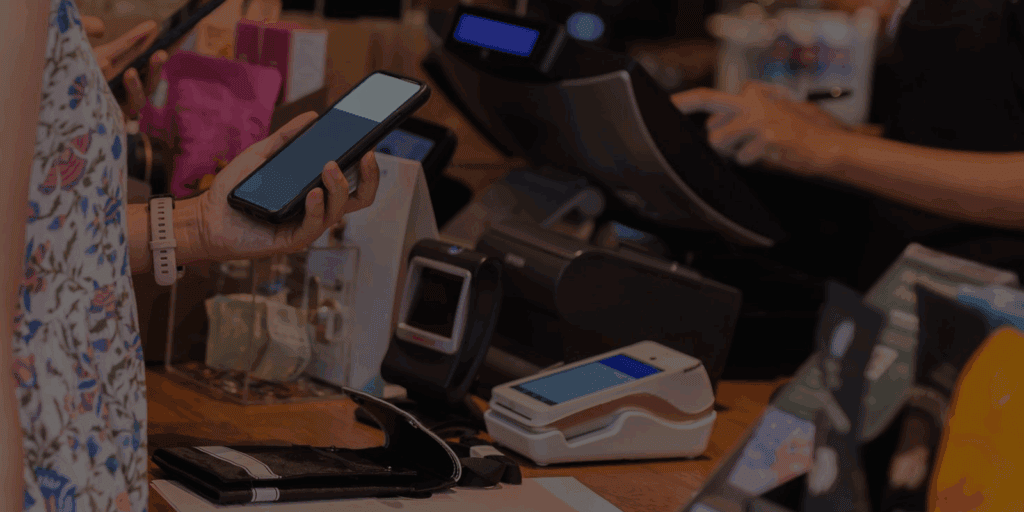
The world of financial technology is moving at a breakneck pace. Beyond Apple Pay and contactless cards, we are seeing the emergence of biometric payments, where a customer might pay using just a palm scan or facial recognition. A forward-thinking POS System is built on an open architecture that can adapt to these emerging trends. If your system is rigid and closed, you will find yourself in the same position a few years from now, needing another complete overhaul.
By choosing a flexible POS System today, you are future-proofing your business against the next wave of innovation. This adaptability is key to long-term survival in an economy that rewards agility. Customers will continue to gravitate toward the easiest and most secure ways to pay, and your POS System must be ready to accommodate them, whatever those methods may be.
Investing in a high-quality POS System also means you are prepared for the integration of Artificial Intelligence (AI) and Machine Learning. These technologies are beginning to play a role in predictive analytics, helping businesses anticipate demand and optimize pricing in real-time. A modern POS System serves as the data collection point for these advanced tools, turning every transaction into a valuable piece of intelligence.
Marketing Your New Payment Capabilities
Once you have implemented a modern POS System, it is important to let your customers know. Simple signage at the door and at the register indicating support for Apple Pay and other contactless options can act as a magnet for tech-savvy shoppers. You can also mention these new capabilities in your social media marketing and email newsletters. This positions your brand as a modern, convenient choice for consumers.
Many businesses find that offering a small incentive for the first use of a mobile wallet can encourage customers to try the new system. Because the POS System handles these transactions so efficiently, the slight cost of the incentive is often outweighed by the long-term shift in customer behavior toward faster payment methods. Over time, as more customers utilize contactless options, the overall efficiency of your store will continue to climb.
Furthermore, a POS System that supports digital loyalty integration can be a powerful marketing tool. You can send personalized offers directly to a customer’s phone based on their purchase history. This level of targeted marketing is only possible when you have a POS System that captures and organizes data effectively. It turns a simple payment terminal into a proactive sales engine.
Overcoming Common Implementation Challenges
Moving to a new POS System can seem daunting, but with proper planning, the transition can be seamless. One of the primary challenges is data migration. You want to ensure that your existing inventory lists and customer databases are accurately transferred to the new system. Most reputable POS System providers offer dedicated support teams to assist with this process, ensuring that no data is lost during the move.
Another challenge is the physical installation. It is often best to schedule the rollout during off-peak hours to minimize disruption to your business. Testing the new POS System thoroughly before going live is essential. This includes running test transactions with various payment types to ensure that the hardware and software are communicating correctly with your merchant bank.
Finally, addressing staff concerns is important. Some employees may be hesitant to learn a new system. Highlighting the ease of use and the benefits of the new POS System—such as less manual counting and faster checkouts—can help gain their buy-in. Once they see how much simpler their jobs become with a modern POS System, any initial resistance usually vanishes quickly.
The Role of the POS System in Multi-Channel Retail
For businesses that operate both online and in physical locations, the POS System acts as the bridge between these two worlds. A unified commerce approach ensures that inventory is synced across all channels. If a customer buys the last item in-store using Apple Pay, your website should immediately reflect that the item is out of stock. This level of synchronization is only possible with a modern, integrated POS System.
This “phygital” (physical + digital) approach is becoming the gold standard for retail. Customers may browse online and buy in-store, or vice versa. A POS System that supports “buy online, pick up in-store” (BOPIS) is essential for meeting these modern shopping habits. Contactless payments are a natural fit for this model, as they allow for quick verification and pickup without the need for extensive paperwork.
Ultimately, the POS System is the heart of your business operations. It touches every part of the customer journey, from the moment they enter the store to the moment they leave. By ensuring that your POS System is ready for Apple Pay and other contactless options, you are not just upgrading a piece of hardware; you are investing in the future of your brand and the satisfaction of your customers.
Strategic Planning for the Transition
Before selecting a new POS System, it is wise to conduct a needs assessment. Consider the specific requirements of your industry. A restaurant might need features like table mapping and split-check capabilities, while a retail store might prioritize robust inventory tracking and barcode scanning. Regardless of the niche, the ability to handle contactless payments should be a non-negotiable requirement for any new POS System.
Engage with different vendors and request demonstrations of their products. Pay close attention to the user interface and the speed of the transaction processing. Ask about their security protocols and how they handle data privacy. A reliable POS System provider will be transparent about their technology and offer robust customer support to help you through the transition and beyond.
Remember that the cheapest option is rarely the best. A low-quality POS System can lead to frequent downtime, lost sales, and frustrated customers. It is better to invest in a reputable, high-performance POS System that will reliably serve your business for years to come. The peace of mind that comes with knowing your payment infrastructure is secure and efficient is worth the investment.
Conclusion
The evolution of payment technology is a clear indicator of where the future of commerce is headed. As contactless options like Apple Pay continue to gain dominance, the importance of having a modern, capable POS System cannot be overstated. By embracing these changes, businesses can improve security, enhance the customer experience, and drive operational efficiency. The transition to a contactless-ready environment is a significant step toward long-term success and sustainability in an increasingly digital world.
Whether you are a small boutique or a large-scale enterprise, your POS System is the foundation upon which your sales are built. Ensuring that this foundation is strong, flexible, and ready for the demands of modern consumers is essential. The shift toward contactless payments is not a passing trend; it is the new standard. By acting now to upgrade your POS System, you are positioning your business to thrive in the years ahead, providing the speed, security, and convenience that today’s shoppers demand and deserve.
Frequently Asked Questions
How do I know if my current POS System is already compatible with Apple Pay?
To determine if your current setup is compatible, look for the NFC symbol (which looks like a series of curved lines, similar to a Wi-Fi icon) on your payment terminal. If the hardware has this symbol, it likely supports contactless payments. However, you should also check your POS System software settings to ensure the feature is enabled and that your merchant service provider supports mobile wallet transactions.
What are the specific hardware requirements for accepting contactless payments?
The primary requirement is an NFC (Near Field Communication) reader. This can be integrated directly into your main terminal or provided as a peripheral device that plugs into your POS System. Additionally, your system should be EMV-compliant to ensure you are meeting the latest security standards for chip-based and contactless transactions.
Are contactless payments processed through a POS System as safe as traditional card swipes?
Yes, they are actually significantly safer. Contactless payments use tokenization, which replaces sensitive card data with a unique, one-time-use code. Even if this code is intercepted, it cannot be used again. Furthermore, mobile wallets require biometric authentication (like FaceID or TouchID) on the user’s device, adding an extra layer of security that a traditional card swipe lacks.
Will upgrading my POS System for Apple Pay increase my transaction fees?
In most cases, the transaction fees for Apple Pay and other contactless payments are the same as traditional “card-present” transactions. Because these payments are highly secure, they do not typically carry the higher risk-based fees associated with manual entry or online payments. Always check with your specific POS System provider or merchant bank for a detailed breakdown of their fee structure.
How long does it typically take to train employees on a new POS System?
Most modern systems are designed to be extremely intuitive, often mimicking the user interface of a smartphone or tablet. Basic training for staff can usually be completed in a few hours. Because a well-designed POS System simplifies the checkout process, employees often find it easier to use than older, more complex legacy systems, leading to a very short learning curve.